High-Power Fiber Laser Consumables FAQ: Complete Guide to Nozzles, Ceramic Rings & Protective Windows

Updated: Jun 4
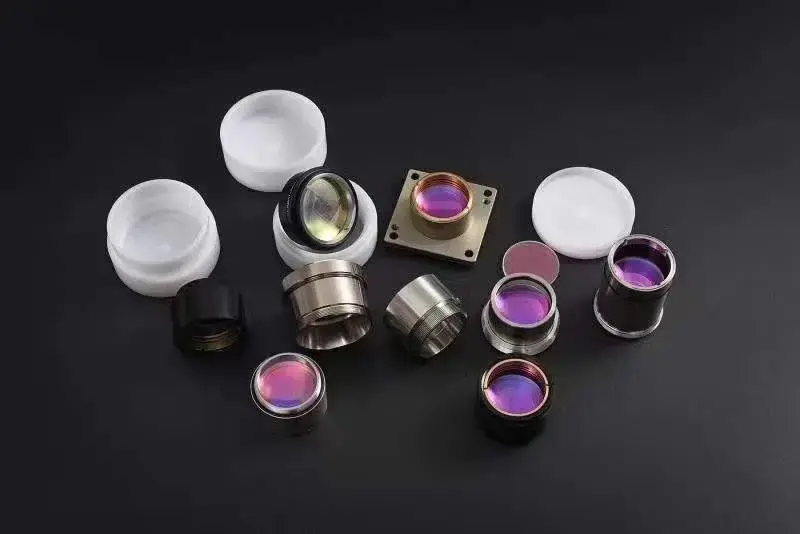
High-power fiber laser cutting is only as stable as the consumables inside your cutting head. When nozzles, ceramic rings, or protective windows don’t match your head/power—or when they’re worn or contaminated—you’ll see it immediately in edge quality, dross, piercing consistency, and height-control stability.
Table of Contents
1. Who This FAQ Is For 2. Nozzle Basics for High-Power Fiber Lasers 3. Ceramic Rings & Holders: Stability and Matching 4. Protective Windows: Clean Optics, Stable Cutting 5. Troubleshooting Common Cutting Issues 6. How to Choose the Right Consumables for Your Head & Power 7. Stock, Lead Times & Global Shipping 8. Technical Support & Remote Guidance 9. How to Get a Tailored Recommendation from Muxi Precision
Who This FAQ Is For
This guide is designed for: • Laser cutting machine manufacturers (OEMs) • Laser equipment distributors and service providers • Metal fabrication factories • Laser cutting workshops • Maintenance engineers and operators
If you are experiencing issues such as: • Poor cutting quality • Excessive dross • Frequent nozzle damage • Unstable capacitive sensing signals • Protective windows cracking too often • Difficulty selecting the right consumables this FAQ will help you identify common causes and choose suitable solutions.
Nozzle Basics for High-Power Fiber Lasers
How Do I Choose the Right Nozzle Diameter?
The nozzle diameter should match:
Laser power
Material type
Material thickness
Assist gas
General recommendations:
Material Thickness | Suggested Nozzle Diameter |
1–3 mm | 0.8–1.2 mm |
4–10 mm | 1.2–1.5 mm |
10–20 mm | 1.5–2.0 mm |
20 mm+ | 2.0–3.0 mm |
Higher-power machines often require larger nozzle openings to ensure stable gas flow and melt removal.


Comparison of single-layer and double-layer laser cutting nozzles commonly used for stainless steel, carbon steel, and high-power fiber laser applications.
Single-Layer vs. Double-Layer Nozzles
Single-layer nozzles (best for stainless steel, aluminum, nitrogen cutting): • Higher gas velocity • Cleaner cutting edges • Better for bright surface finishing
Double-layer nozzles (best for carbon steel, oxygen cutting): • More stable oxygen flow • Better oxidation cutting performance • Improved cutting consistency on thick plates
Why Does My Nozzle Turn Black or Melt?
Common reasons include: • Nozzle collision with material • Improper nozzle height • Damaged protective window • Excessive reflected laser energy • Poor centering between beam and nozzle
For high-power systems above 20kW, even small alignment errors can rapidly overheat the nozzle.
Real-World Case: Frequent Nozzle Burnout on a 20kW Carbon Steel Production Line
A metal fabrication customer operating a 20kW fiber laser experienced repeated nozzle overheating and discoloration. In some cases, the nozzle needed replacement every few days.
After reviewing cutting videos and inspecting the consumables, Muxi Precision engineers identified two issues:
A contaminated lower protective window was causing excessive heat accumulation.
The laser beam was slightly offset from the nozzle center.
After replacing the protective window and recalibrating nozzle centering, the customer achieved:
Approximately 3× longer nozzle life
More stable cutting quality
Reduced downtime for consumable replacement
Key Takeaway: Nozzle burnout is not always caused by the nozzle itself. Protective windows and beam centering should also be checked.
How Important Is Nozzle Concentricity?
Nozzle concentricity directly affects gas flow symmetry, cutting edge quality, dross formation, and piercing performance. A poorly centered nozzle can cause: • Slanted cuts • Inconsistent kerf width • Uneven edge quality
Always perform nozzle centering checks after replacement.
Can Nozzles Be Shared Across Different Cutting Heads?
Not always. Many nozzles may appear similar but differ in thread dimensions, height, seating structure, and internal geometry. Compatibility depends on the specific cutting head model (Raytools, Precitec, WSX, Bodor, Au3tech, and others). Always confirm the exact model before ordering.
At Muxi Precision, we frequently help customers identify compatible nozzles for Raytools, Precitec, and WSX cutting heads to avoid ordering errors and unnecessary downtime.
When Should I Replace a Nozzle?
Replace the nozzle if you notice: • Burn marks around the orifice • Deformation of the nozzle opening • Frequent cutting instability • Difficulty maintaining proper centering • Increased dross despite unchanged parameters
Ceramic Rings & Holders: Stability and Matching
What Does a Ceramic Ring Actually Do?
The ceramic ring is a critical component between the cutting head and nozzle. Its functions include: • Supporting the nozzle • Providing electrical insulation • Transmitting capacitive sensing signals • Assisting automatic height control


Ceramic rings provide electrical insulation, support nozzle positioning, and transmit capacitive sensing signals for automatic height control in fiber laser cutting heads.
Without a properly functioning ceramic ring, stable cutting becomes difficult.
How Can I Identify My Ceramic Ring Model?
Typically, identification requires: • Brand of cutting head • Thread specification (M8, M11, etc.) • Diameter dimensions • Photographs of front and side views
Providing photos is often the fastest method for accurate matching.
Do High-Power Lasers Require Special Ceramic Rings?
Yes. For systems above 12kW / 20kW / 30kW / 40kW+, the ceramic ring must withstand higher thermal loads, stronger vibration, and increased electrical stability requirements. Reinforced ceramic rings are generally recommended for high-power applications.
Muxi Precision engineers recommend reinforced ceramic rings for continuous 20kW+ production environments, where thermal stress and prolonged operating hours place greater demands on consumable durability.
Why Is My Capacitive Signal Unstable?
Possible causes: • Cracked ceramic ring • Internal contamination • Loose installation • Oxidized contact surfaces • Excessive heat exposure
Typical symptoms include nozzle height fluctuations, autofocus instability, and unexpected machine alarms.
Real-World Case: Unstable Height Control Caused by a Damaged Ceramic Ring
A customer cutting 8 mm stainless steel reported sudden fluctuations in nozzle height and inconsistent edge quality.
The machine occasionally displayed capacitive sensing alarms, but no obvious fault could be found in the cutting head.
After receiving photos from the customer, Muxi Precision engineers noticed a hairline crack in the ceramic ring.
Once the ceramic ring was replaced:
Capacitive signals returned to normal
Automatic height control stabilized
Cutting consistency improved significantly
Key Takeaway: Even small cracks in a ceramic ring can affect signal transmission and cutting stability.
How Often Should Ceramic Rings Be Replaced?
There is no fixed schedule. Replacement depends on operating hours, power level, material type, and maintenance practices. Regular inspection is recommended, especially for high-power cutting operations.
Universal vs. Reinforced Ceramic Rings
Universal ceramic rings are suitable for standard production and moderate power levels. Reinforced ceramic rings are recommended for 20kW+ heavy-duty production and continuous operation, offering improved thermal resistance and longer service life.
Can Ceramic Rings Be Interchanged Between Brands?
Interchangeability may be possible in some cases but is not always recommended. Risks include signal instability, improper nozzle positioning, reduced cutting performance, and premature component failure.
Protective Windows: Clean Optics, Stable Cutting
What Is the Difference Between Upper and Lower Protective Windows?
Upper protective window: protects collimation optics and internal optical components. Lower protective window: protects focusing optics and the optical path closest to the cutting process.
The lower window usually experiences more contamination and requires more frequent inspection.
How Do AR Coatings Affect Performance?
High-quality anti-reflective (AR) coatings can reduce energy loss, minimize heat buildup, improve optical transmission, and extend component lifespan—especially important as laser power increases.
Why Do Protective Windows Get Dirty So Quickly?
Common causes include poor gas purity, improper nozzle height, back spatter from molten metal, damaged sealing components, and incorrect piercing parameters.
Why Do Protective Windows Crack?
Potential reasons include thermal shock, contamination buildup, poor-quality optics, excessive reflected energy, and improper installation torque.
Real-World Case: Protective Windows Failing Every Week on a 30kW Laser
A service provider operating a 30kW fiber laser reported unusually frequent lower protective window failures.
The windows developed burn marks and cracks after only a few days of operation.
Further investigation revealed:
Nitrogen purity was below the required level.
Piercing parameters generated excessive back-spatter.
Contamination accumulated rapidly on the lower protective window.
After optimizing the gas supply and piercing process, the customer observed:
Significantly longer protective window life
Reduced maintenance frequency
More stable cutting performance
Key Takeaway: Protective window failures are often related to process conditions rather than the optical component itself.
How Can I Tell If a Protective Window Is Affecting Cutting Quality?
Warning signs include reduced cutting speed, increased burr formation, inconsistent piercing, overheating alarms, and visible contamination or burn marks. Inspect under proper lighting during routine maintenance.


Signs of Protective Window Contamination and Damage
Troubleshooting Common Cutting Issues
Why Does the Same Program Cut Well During the Day but Poorly at Night?
Possible factors include gas supply fluctuations, ambient temperature changes, electrical stability, cooling system performance, optical contamination, and consumable wear (which can amplify these effects).
Is Heavy Dross Always Caused by Insufficient Power?
No. Dross can also result from incorrect nozzle selection, damaged ceramic rings, contaminated protective windows, poor focus settings, and gas pressure issues.
What Consumables Affect Surface Roughness?
The most common factors include nozzle condition, protective window cleanliness, ceramic ring stability, and nozzle centering accuracy.
How Are Gas Pressure, Nozzle Height, and Focus Related?
These factors work together as a system. Even high-quality consumables may perform poorly if gas pressure is incorrect, nozzle height is unstable, or focus position is not optimized.
How Can I Quickly Identify the Source of a Problem?
A simple inspection sequence: 1) Check protective windows. 2) Inspect nozzle condition. 3) Verify nozzle centering. 4) Examine ceramic ring integrity. 5) Review gas pressure and focus settings. This approach resolves most cutting issues efficiently.
How to Choose the Right Consumables for Your Head & Power
A practical selection method: Step 1: Identify your cutting head (Raytools / Precitec / WSX / Bodor / Au3tech, etc.). Step 2: Confirm laser power (6kW / 12kW / 20kW / 30kW / 40kW+). Step 3: Define your application (thin-sheet stainless steel, thick carbon steel, aluminum, high-volume production).
Compatibility Reference Table
Common Laser Cutting Head Consumable Compatibility Reference
Cutting Head Brand | Typical Models | Compatible Nozzle Type | Compatible Ceramic Ring | Protective Window Configuration |
Raytools | BM110 / BM111 / BM114 | Raytools Standard Nozzle | Raytools Ceramic Ring | Upper & Lower Protective Windows |
Precitec | Procutter 1.0 / 2.0 / Zoom | Precitec Nozzle | Precitec Ceramic Ring | Precitec Protective Windows |
WSX | NC30 / NC63A / NC310 | WSX Nozzle | WSX Ceramic Ring | WSX Protective Windows |
Bodor | Genius Series | Bodor-Compatible Nozzle | Bodor-Compatible Ceramic Ring | Bodor Protective Windows |
Au3tech | Cypcut-Compatible Heads | Au3tech Nozzle | Au3tech Ceramic Ring | Au3tech Protective Windows |
Ospri | LC Series | Ospri Nozzle | Ospri Ceramic Ring | Ospri Protective Windows |
Important: Consumables may vary depending on the exact cutting head model and generation. If you are unsure, simply send photos of your existing nozzle, ceramic ring, or protective window, and the Muxi Precision team can help identify the correct replacement.
Recommended Consumables by Laser Power
Laser Power | Nozzle Recommendation | Ceramic Ring Recommendation | Protective Window Recommendation |
3–6kW | Standard Precision Nozzle | Standard Ceramic Ring | Standard AR-Coated Window |
6–12kW | Premium Precision Nozzle | Standard Ceramic Ring | High-Transmission Protective Window |
12–20kW | High-Stability Nozzle | Reinforced Ceramic Ring | High-Power Protective Window |
20–30kW | High-Temperature Resistant Nozzle | Reinforced Ceramic Ring Assembly | Enhanced Thermal-Resistance Window |
30–40kW+ | Heavy-Duty High-Power Nozzle | High-Power Ceramic Assembly | Premium High-Power Protective Window |
Tip: As laser power increases, consumables are exposed to higher thermal loads, stronger back-reflection, and more demanding operating conditions. Selecting consumables specifically designed for high-power applications can help improve cutting stability, reduce downtime, and extend service life.
At Muxi Precision, reinforced ceramic rings, high-temperature-resistant nozzles, and premium protective windows are commonly recommended for customers operating 20kW, 30kW, and 40kW+ fiber laser systems.
Typical High-Power Configuration Examples
• 6–12kW: Standard nozzle + standard ceramic ring • 20kW: Reinforced ceramic ring + premium window • 30kW: High-temperature ceramic ring + premium optics • 40kW+: Heavy-duty consumable package with enhanced thermal stability
What Information Should I Send for Fast Matching?
Please provide: • Cutting head model • Laser power • Photos of current consumables • Material type • Material thickness • Existing part number (if available) This allows our engineers to identify compatible models quickly.
Stock, Lead Times & Global Shipping
Are Common Models Available from Stock?
Yes. Many popular consumables for major cutting head brands are regularly stocked for fast shipment.
How Long Does International Shipping Take?
Typical delivery times:
Region | Estimated Delivery |
Europe | 5–10 days |
North America | 5–10 days |
Middle East | 4–8 days |
Southeast Asia | 3–7 days |
Actual delivery times may vary by destination and shipping method.
Do You Support Small Trial Orders?
Yes. Many customers begin with sample orders before moving to larger-volume procurement programs.
How Are Products Packaged?
Products are typically supplied with protective packaging, individual labeling, batch traceability, and inspection records to ensure safe international transportation.
Technical Support & Remote Guidance
Can You Help Diagnose Cutting Problems Remotely?
Yes. Our technical team can assist with poor penetration, excessive dross, nozzle overheating, protective window failures, and capacitive signal instability.
What Information Should I Provide?
For faster analysis, please prepare cutting videos, material specifications, laser power, gas type and pressure, focus settings, and photos of consumables.
Can You Recommend Process Improvements?
Yes. Based on your application, we can suggest consumable upgrades, parameter adjustments, maintenance recommendations, cost-reduction strategies, and more stable production setups.
What Happens If There Is a Quality Issue?
Our process includes technical review, root-cause analysis, replacement or corrective action if required, and preventive recommendations for future production.
How to Get a Tailored Recommendation from Muxi Precision
Finding the right consumables doesn’t have to be complicated. To receive a personalized recommendation, simply send: • Cutting head brand and model • Laser power • Material type and thickness • Photos of existing consumables • Any current cutting issues
Contact Options
Website inquiry form: best for new projects, product matching requests, and bulk purchasing inquiries. WhatsApp: best for fast communication, sharing photos/videos, and technical troubleshooting. Email: best for formal quotations, technical documentation, and long-term procurement discussions.
Dedicated Support for High-Power Laser Users
For customers operating 10kW, 20kW, and 40kW+ systems, Muxi Precision provides priority technical support, rapid model matching, and responsive after-sales assistance to help maintain stable production and minimize downtime.
Not Sure Which Consumables Match Your Cutting Head?
Send us:
✓ Cutting head model
✓ Laser power
✓ Material type
✓ Photos of current consumables Within 24 hours,
Muxi Precision engineers will recommend compatible: Nozzles Ceramic rings Protective windows for your specific application.
🔧 Need more technical details? Visit our Nozzle Technical Center for complete engineering data and troubleshooting procedures.


Comments